
When You Don’t Know What You’re Doing


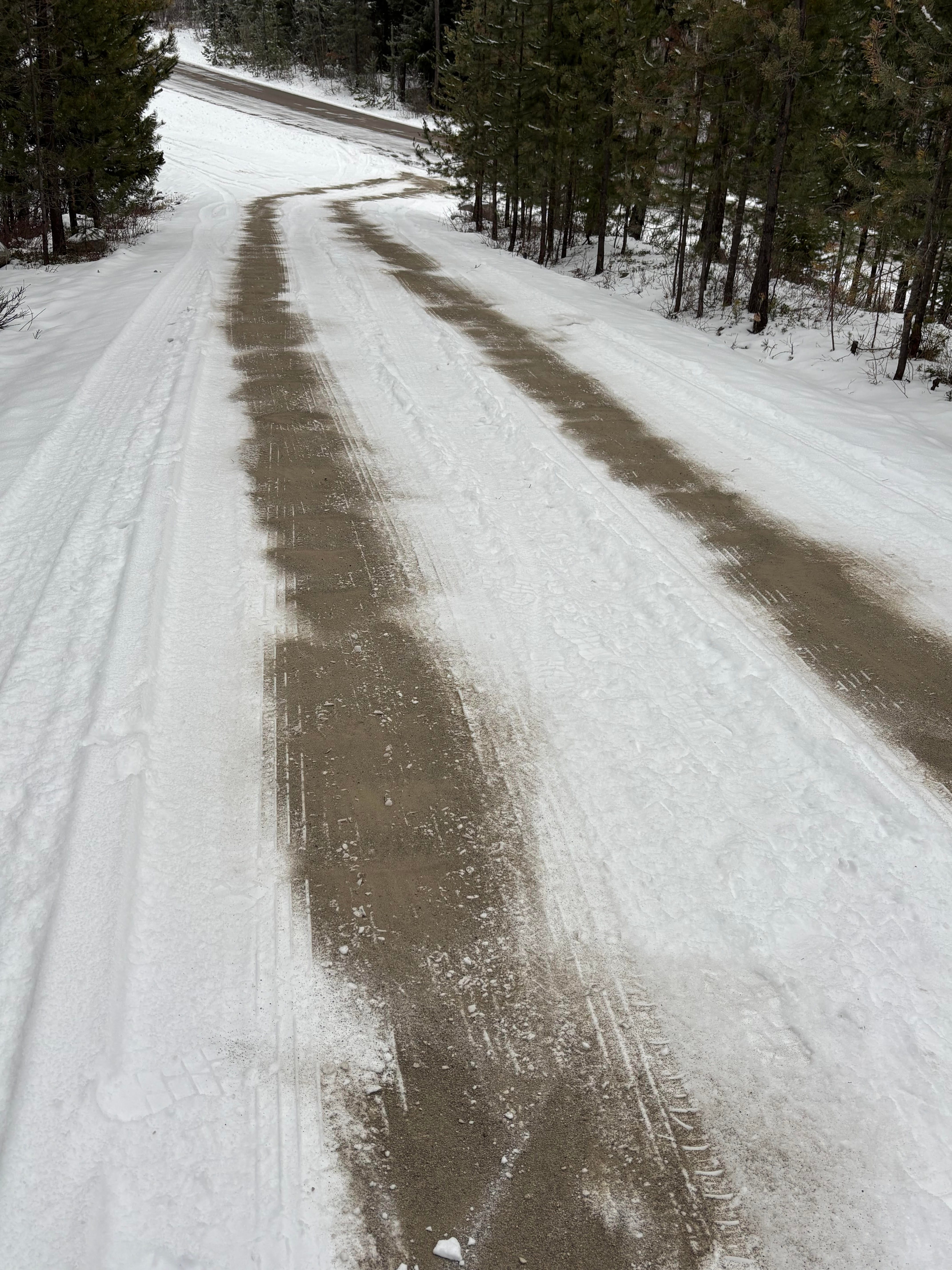
I woke up early this morning to do something I’ve never done before: sand a driveway.
Not the whole thing. Just the steep part where the delivery truck might slip if I don’t give it some help. See, where I come from in California, when snow appeared in the forecast, everything shut down. Schools closed. Businesses shuttered. Everyone stayed home. But here in Montana, between Glacier National Park and the Bob Marshall Wilderness, things keep moving. People are used to cold and snow. The question is whether I am.
The neighbors driving by certainly had their doubts. They honked as they passed. I waved back, imagining the smiles and the friendliness behind their windshields. And I could almost hear their thoughts: Rookie.
And you know what? They’re right.
The Humility of Not Knowing
I am at the bottom of the learning rung this year. Every day brings a new education: How steep is too steep for a delivery driver? How much sand do you actually need? What’s the difference between preparation and paranoia when you’re watching the weather?
This isn’t about making resolutions. This is about accepting reality with humility: I have a lot to learn.
Researchers have identified what holds people back from learning, and the barriers are surprisingly consistent. Fear of failure tops the list—that self-conscious certainty that you won’t be able to understand the new information or master the new skill. Many people find safe harbor doing what they already know best, missing out on learning new things because they’re afraid to exit their comfort zone. There’s also what psychologists call “cognitive bias”—we assume we need more preparation, more research, more classes before we can actually begin.
But here’s what I’m discovering: at some point, you have to leap in and take action.
Yes, some will want to do extensive research first. Others will want to take a class. Still others will talk to those farther ahead in knowledge. All of that has value. But none of it replaces the education that comes from actually doing the thing. From making mistakes. From figuring out better ways through trial and error. From learning by living it.
Experiential learning—what educators call “learning by doing”—works because it engages us personally. When we have a personal stake in the subject, when we’re experiencing consequences and adjustments in real time, the lessons stick. The process itself becomes the teacher. Researchers emphasize that what makes experiential learning powerful isn’t just the doing—it’s the cycle of experiencing, reflecting, and applying. You do something, you think about what happened, and then you adapt and try again.
I shoveled sand onto a snow-covered driveway this morning because I needed the delivery to arrive. Simple as that. And in the process, I learned something about mountain winters that no amount of reading could have taught me.
The Compass offers reflections on the way to a deeper, more transformative life with God—learning to see beauty, rest in God's presence, and grow through the ordinary moments that shape us. Subscribe to join the conversation.
Beauty in the Fog
But here’s the thing about stopping to do something you don’t know how to do: it forces you to pause. And pausing creates space for seeing.
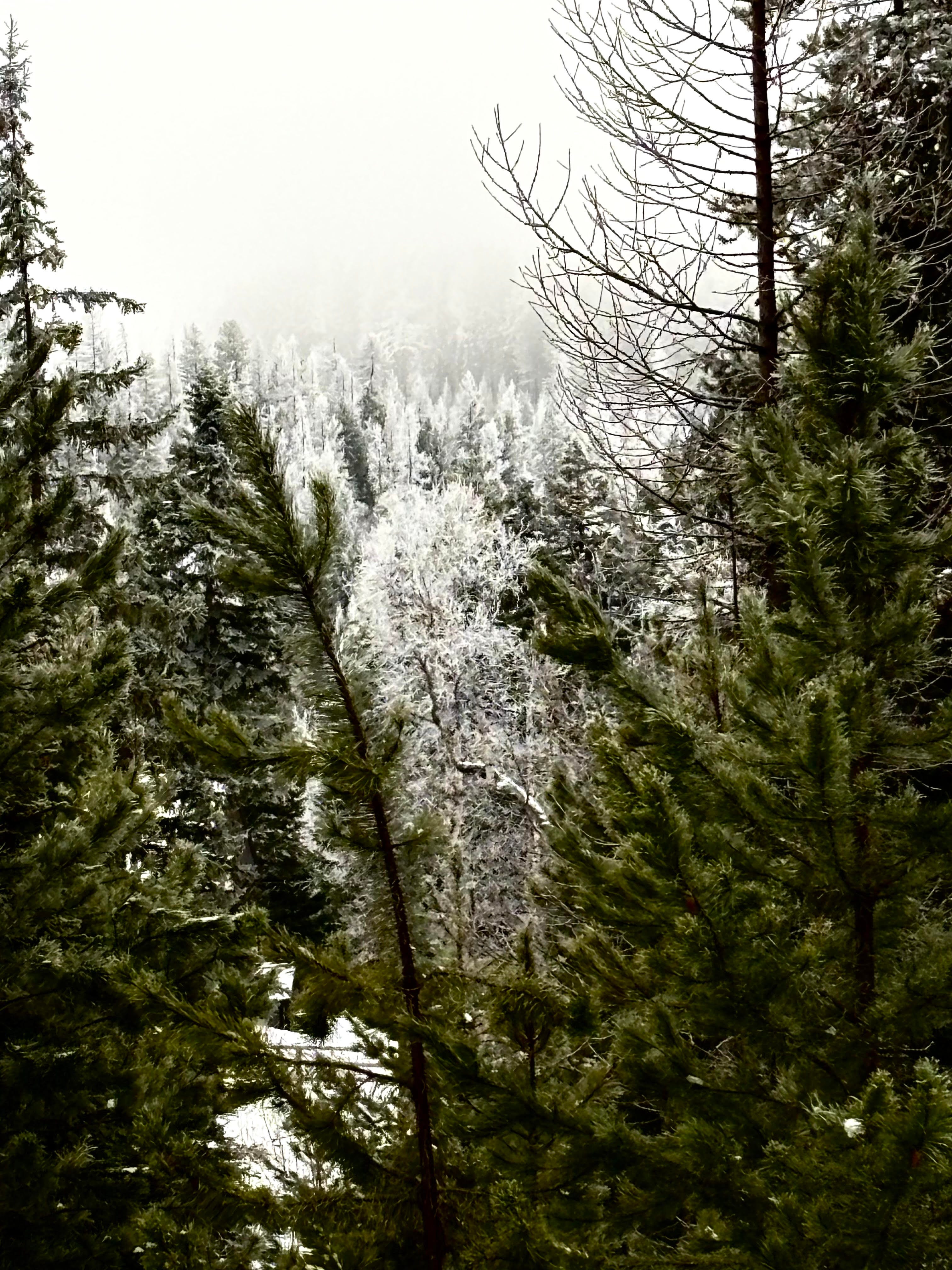
While I was out there with my shovel and my rookie status, I looked up. The day was overcast, a thick fog blanketing the mountains around me. I know what’s happening in the wider world—the ugly anger, the hate, the rage, the fear that seems rampant in our culture. It feels like society is heading toward an even uglier dissolution.
But standing there in the cold, I saw something else: trees covered with frost, creating a stunning contrast of deep green and frosted foliage. Beauty emerging in the middle of thick fog.
What keeps us from seeing beauty all around us?
Psychology research suggests several culprits. We’re constantly distracted, our attention fragmented by multiple stimuli. We live in what researchers call a state of “automatic mental functioning”—our minds passing mechanically from one thing to another without stopping, looking without actually seeing. Contemporary life discourages the kind of attentive presence needed to notice beauty.
We’re also culturally conditioned to focus on what’s wrong, what’s threatening, what needs fixing. Negativity bias is real. And when you add the relentless drumbeat of crisis from news and social media, our perceptual adaptation—the experience-based process that reshapes how we see our environment—becomes trained toward seeing danger, discord, and decay.
But beauty surrounds us daily. Studies using experience sampling methods (where participants photograph and rate their surroundings throughout the day) found that people frequently encounter beauty in everyday life, particularly in nature. And here’s what matters: those encounters with beauty have a measurable mood-boosting effect. Beauty isn’t just aesthetically pleasing—it’s restorative. It helps rebalance our emotions.
The Christian contemplative tradition has long understood this. Contemplation—what Francis de Sales called “a loving, simple and permanent attentiveness of the mind to divine things”—trains us to see what God has placed before us. Wayne Teasdale, a monk-in-the-world, wrote that “the contemplative attitude is cultivated through deep attention to what is before us. It requires an intention to seek and be receptive to the Divine wherever we may be, wherever we may look.”
When we’re rushing through our automatic routines, we miss the beauty God scatters through creation. When we’re consumed by worry about the future or rumination about the past, we miss it. But when we practice what the Desert Fathers and Mothers called “attentiveness”—stopping, calming the heart, and observing in silence—beauty reveals itself as gift.
Learning to See
So here’s what I want this year: to become a learner again. Not someone who has it all figured out. Not someone who waits until they feel fully prepared. But someone willing to be a rookie, to make mistakes, to ask for help, to shovel sand on a frozen driveway because that’s what the moment requires.
And I want to learn to see beauty—to cultivate what the contemplative tradition calls “the gaze of the soul upon the beauty and the glory of God.” To develop the kind of attention that notices the frost on the trees even when the fog is thick, even when the cultural temperature feels toxic, even when everything in my news feed suggests there’s nothing beautiful left to find.
This isn’t optimistic naivety. It’s intentional practice. It’s what Saint Gregory the Great called “resting in God”—not the suspension of all activity, but the reduction of many acts and thoughts to a single focus: God’s presence in this moment, this place, this frozen morning with its sanded driveway and frosted trees.
Because what we attend to shapes who we become.
If I only attend to what I already know, I stop growing. If I only attend to what’s ugly and broken, I become more ugly and broken. But if I can stay humble enough to keep learning and awake enough to keep seeing, then maybe this year—rookie status and all—becomes something worth living.
I’m still waiting to see if the delivery truck will make it up the driveway. I did what I could with what I knew. I don’t know if it will be enough. But in the process, I learned something. And I saw something beautiful.
That feels like a good way to start a year.
What are you learning this year? And what beauty are you noticing that might be easy to miss?
I explore these kinds of questions on The Compass—reflections on contemplative Christian spirituality for people learning to pay attention. Subscribe below to join us. And if this spoke to you, please share it with someone who's trying to learn something new.
Beautiful and encouraging.
Thank you
Did the delivery driver make it?
I accept this challenge to try something I’ve never done before. I’m not exacting sure what 2026 holds for me, but I’ll be looking for things not learned or tried before and the beautiful right before my eyes.