
How to Keep Your Head When Everything Around You Is Losing Its Mind
Find Your Wilderness

“Jesus therefore no longer walked openly among the Jews, but went from there to the region near the wilderness…” — John 11:54
Yesterday morning, a place we have been quietly preparing for years, tucked into one of the most stunning wildernesses in North America, near Glacier National Park, was prayed over. As we stood in that circle of prayer, I kept thinking about a single verse from the gospel of John that I had been sitting with all week.
It is easy to miss. Just a half sentence, really. But it tells you everything about how Jesus managed to stay keep his head and heart when everything around him was coming apart.
Because that is the real question, isn’t it. Not whether hard things are coming. They are. Not whether the pressure will mount, the demands multiply, the noise grow louder, and the threat of losing yourself inside all of it become very real. It will. The question is whether you have a place to go before it peaks.
Jesus did. And I want to show you what it looked like.
If you are new here, welcome. The Compass exists to help you slow down long enough to find your way again. Paid subscribers receive a monthly practice tool, teaching video, and a live conversation about the interior life. If this kind of formation work matters to you, consider joining us.
Find Your Wilderness
Holy Week has begun. Jesus is already in Jerusalem. The city is alive with Passover crowds, and the religious leaders have already issued the order: find him and arrest him. He is not hard to locate now. He is making waves. He upended the commerce in the temple courts, and the whole city is talking.
But I want to go back. Two or three days before he ever entered the city, before the palm branches and the shouting, John gives us a small and easily overlooked detail. Jesus, feeling the pressure of the gathering storm, withdrew. Not dramatically. Not to a distant desert. He slipped away to a quiet place in the wilderness on the edge of the city.
He had been here before. Not this exact hillside, perhaps, but this exact kind of place.
He knew what the wilderness asked of you. He had spent forty days in one when he first walked into his mission. He knew how disorienting it could be, how draining. But he also knew what the wilderness gave back. It was the place where the noise stopped and the Father’s voice became audible again. And he knew, the way you know something in your bones, that he would need that voice in the days ahead.
So he stepped back. Not to hide or because he was afraid. He stepped back in order to step forward.
An Olive Orchard on the East Side of Town
Now hold that image and carry it forward a few days towards the ending of Holy Week. The Passover meal is finished. The long, winding conversation around the table has ended. The city is quiet, the streets mostly empty. And Jesus, once again, leaves.
He goes out the eastern gate and walks a short distance to a slope called the Mount of Olives and to a specific place called Gethsemane. We have given that name a weight it probably did not carry for those who knew it. Gethsemane was not then a sacred precinct or a dramatic landscape. It was a working olive orchard, the kind of place that would have been familiar and ordinary to anyone in Jerusalem. A hillside grove, fragrant with trees and blossoms, removed from the noise of the city by just enough distance to make the silence feel like something.
It was his go-to wilderness whenever he was in Jerusalem. Local. Accessible. Not rugged or remote, just quiet.
And he went there to pray before the trap was sprung.
The same man, the same instinct, the same need. Before the pressure mounts, he withdraws. Before the plot closes in, he finds the place where he can hear God speak. He did it before entering the city. He did it after the meal. It was a strategy that had become a lived rhythm, a way of moving through the world that kept him tethered to the only voice that ultimately mattered.
What We Are Formed By
You and I both know we do not easily live out this rhythm of withdrawal to go forward.
We are formed by urgency. Trained from the beginning to keep going, keep producing, keep pushing, keep responding. We measure faithfulness by never stopping, by always saying yes to everything. The person who pushes through earns our admiration. The person who steps back earns our concern.
Stepping back feels like falling behind. Slowing down feels irresponsible. Silence feels unproductive. And genuine withdrawal can feel like a kind of failure, as if we are abandoning the very people and work we are called to serve.
But Jesus tells a different story.
There are moments when stepping back is not avoidance but obedience. Moments when withdrawing is not weakness but wisdom. Moments when the most faithful thing you can do is become hidden again. Because clarity rarely comes in noise, pressure, or hurry. It comes in the quiet before the crowd. It comes in an olive orchard on the east side of a noisy city, in the dark hours before everything changes.
The wilderness does not make the hard things disappear. It makes you someone who can face them without losing yourself in the process.
What We Have Been Building Toward
This morning, in a circle of prayer with the leaders of Oasis Rest International, we understood something we had only been working toward.
For years now, Lorri and I have been preparing a retreat space near Glacier National Park for pastors, missionaries, and leaders who have forgotten, like we had, how to stop. People who have given everything to everyone and arrived at a kind of emptiness that busyness can no longer fill. People who are, in the truest sense, losing their heads and hearts, not from weakness, but from having no wilderness to return to.
This week that place goes live. It is called Stillpoint, and it is now open.
We felt this morning how much Jesus’s rhythm had shaped the vision. He stepped back before the pressure peaked, not after it was too late. He found the wilderness not as a last resort but as a regular return. What we have been building is a place that makes that kind of return possible: a quiet respite from the noise, a space where the voice of the Father can be heard again, a place where the beauty of the Glacier mountains can dslows you down, open you up, and remind you there is a better way than running on empty.
If you know a pastor, a missionary, or a leader for whom a few days of withdrawal would be a gift, Stillpoint was built for them. We would be honored to welcome them.
A Simple Practice for Today
Before you settle into silence today, sit with this question:
Where is my wilderness?
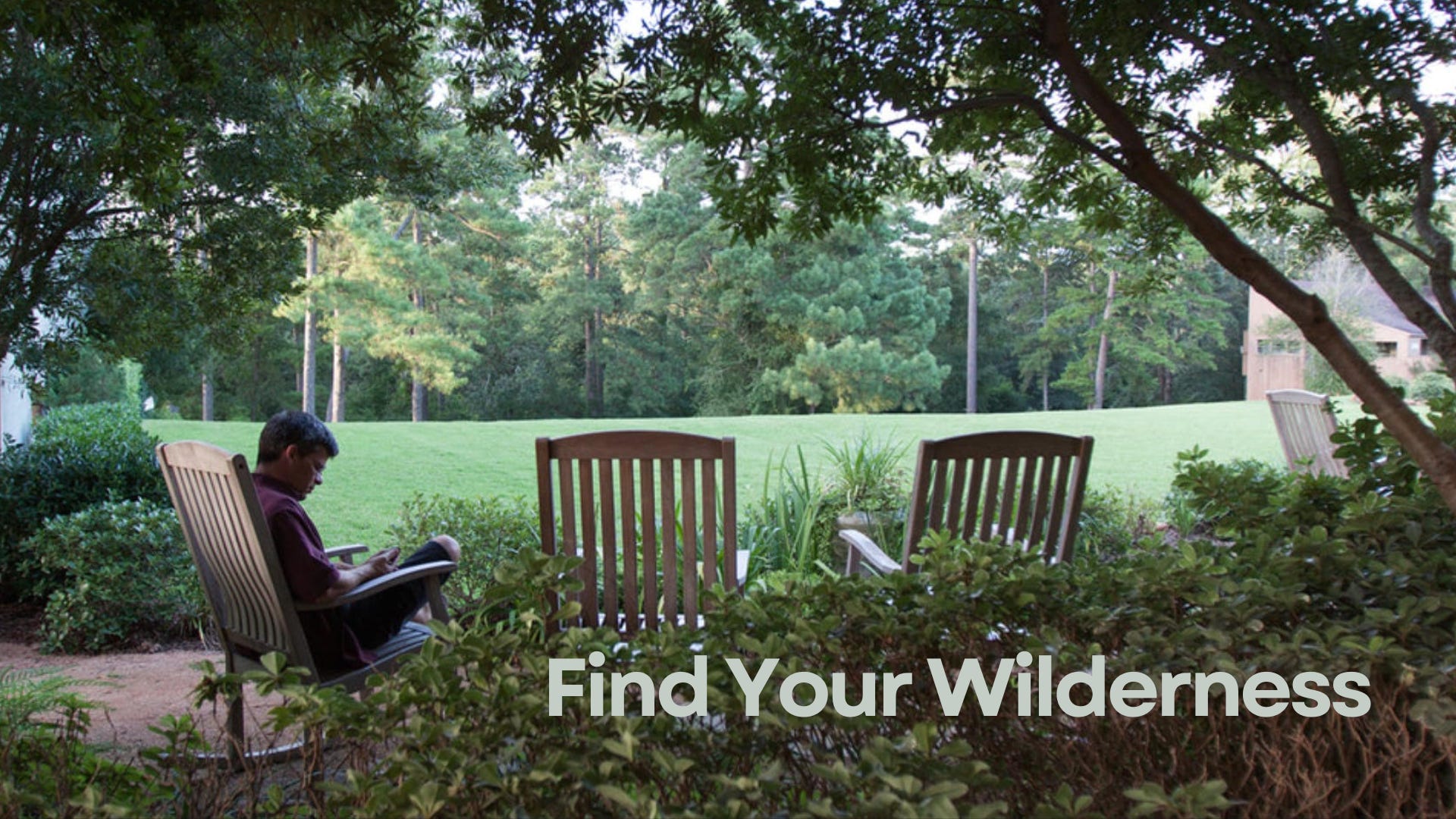
Not a dramatic one, necessarily. Not a desert or a mountaintop. It might be a hammock under a tree. A bench on the edge of a field. A trail near your home, a parked car, a back porch. A space of intentional stillness in a world that will not stop shouting.
Whatever it looks like, find it. And then go there and do nothing. Sit. Walk. Breathe. Let yourself be found again.
In that space, pray:
God, where are You inviting me to step back in order to step forward? Show me how to be hidden without shame, still without fear, and present without needing to prove. Let the stillness do its deeper work. Let it remind me who I am apart from what I produce. Let it renew my hunger for a deeper life with You.
Gratefully,
— Gene Maynard
P.S. If these reflections have helped you slow down and reconnect, becoming a paid subscriber is the best way to support this work. Paid subscribers receive a monthly practice tool, a teaching video, and a live Zoom conversation. And if you know someone who needs a true wilderness of their own, Stillpoint is now open. We built it for them.
Congratulations! God has an amazing plan in mind for Stillpoint and you and Lorri!
Congratulations on the official opening of Stillpoint. Your labor is blossoming. 🌷